
By Nina Shapiro
The Seattle Times
SEATTLE — On his first night of freedom, after nearly 30 years in prison, Barry Massey went to Walmart.
He had heard about its vastness, its array of choices, its round-the-clock hours. He walked the aisles, marveling, but wanted more time to carefully consider.
A few days later, he knew what to buy: a bike. He took it out to the Walmart parking lot, and rode — fast.
“Best thing ever,” he recalled. “I felt literally like a kid again.”
That’s what he was — a kid — when he went to prison for a robbery-turned-murder in which he participated at age 13.
Tried as an adult, he was the youngest person in the country, at 14, sentenced to life without parole.
Mandatory sentence
It was a mandatory sentence for aggravated murder — one that in 2012 was called into question by the U.S. Supreme Court.
Mandatory life sentences, the justices ruled in Miller v. Alabama, constituted cruel and unusual punishment for juveniles, ignoring their “immaturity, impetuosity, and failure to appreciate risks and consequences.”
An earthquake in the realm of juvenile justice, the ruling prompted a change of state law that went even further — allowing more than 200 prisoners, including those sentenced as juveniles to more than 20 years, to apply for release.
Massey’s case was the first to be heard by the state Indeterminate Sentence Review Board.
On Feb. 16, he walked out of the Monroe Correctional Complex to a world he had never seen as an adult. Prison, he said, “is all I knew. I knew nothing about being free anymore.”
A 6-foot, 210-pound 42-year-old, Massey had never driven a car, drunk alcohol or used public transportation other than a school bus.
He’s had to get up to speed not only on a wealth of societal changes, but on what it means to live on the outside as a grown man with a wife and child.
In a 2009 prison ceremony, Massey married a woman he met 12 years earlier, while he was an inmate at Monroe and she was a corrections officer.
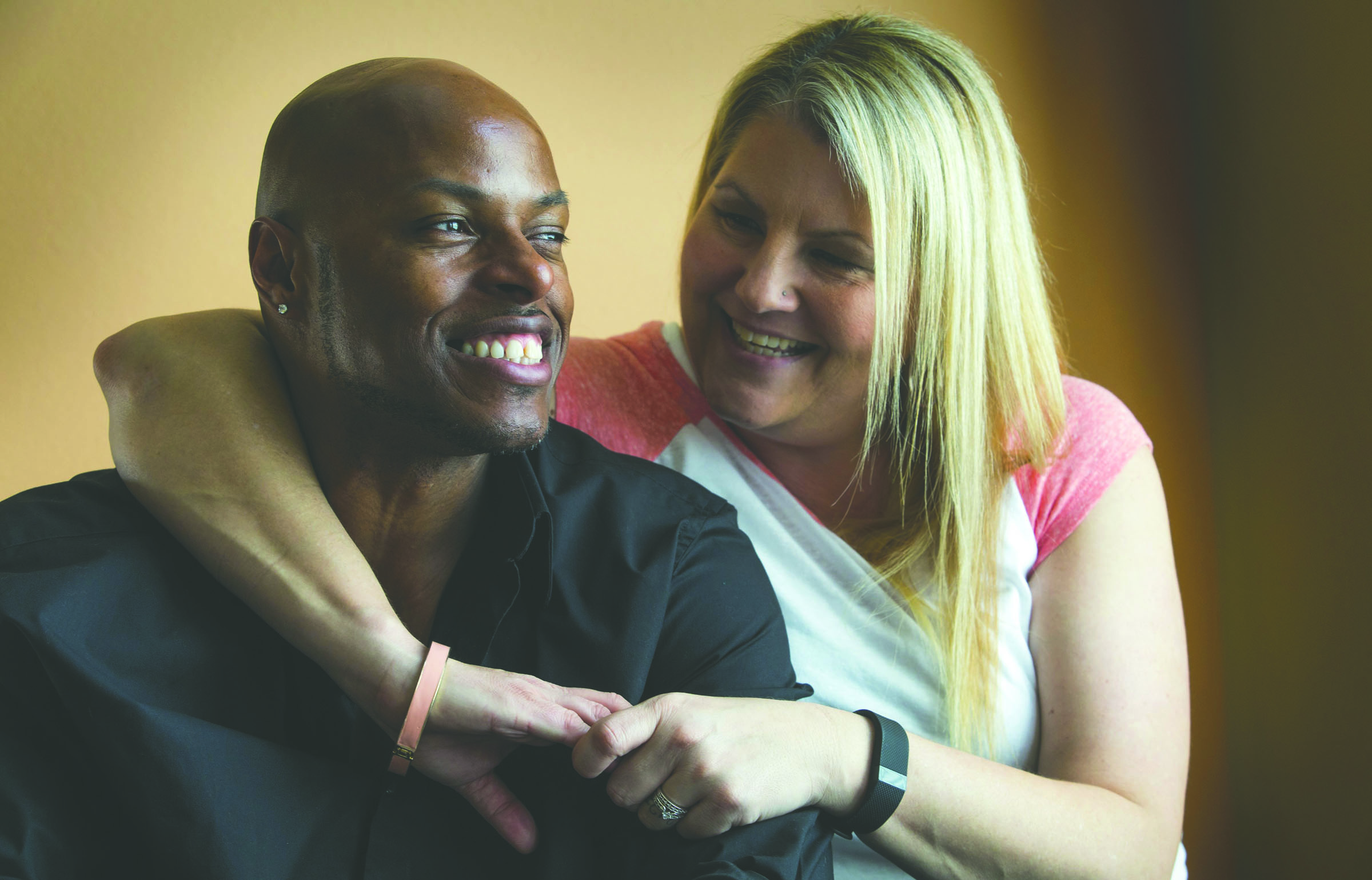
Rhonda Massey’s now 15-year-old daughter from a previous relationship considers Massey her dad, the couple say, seated side by side one afternoon in the Monroe house they now share.
For many of Massey’s supporters — including Richard Mitchell, former general counsel to Gov. Chris Gregoire, and criminal justice reformers nationwide — his release offered cause for celebration.
His attorney, Maureen Devlin, said it symbolized “a recognition that we don’t give up on children — ever. They can change.”
And yet, she acknowledged, “this isn’t a day of celebration for everyone.” The family of Paul Wang, the Steilacoom marina store owner shot twice and stabbed repeatedly in the 1987 robbery, “has been through hell.”
The family and Pierce County Prosecutor Mark Lindquist have consistently opposed Massey’s release.
“I lost my childhood too,” Elissa Wang, the slain store owner’s daughter, wrote in a letter read aloud at a 2006 clemency hearing for Massey.
“I am very, very remorseful,” Massey said. “I’m just going to make my actions speak for me rather than saying it again and again.”
Next steps
A week into freedom, wearing a black shirt and one of the first pairs of jeans he had ever picked out for himself, Massey said he was going to take some time figuring out his next steps.
His wife, now an investigator with the Snohomish County Office of Public Defense, took an extended leave to be with him.
Whether he goes back to school or looks for a job, he said, he wants to volunteer with youth programs, as he did in prison as part of a group of inmates who talked to visiting teenagers. The message he said he most wants to convey: “that peer pressure is real.”
Massey said he was seeking the approval of then-15-year-old Michael Harris when he became a partner in crime, first sneaking into the home of an elderly woman and robbing her, and then holding up Wang.
Massey has long said he did not take part in the violence, although that remains in dispute.
Whoever did the actual killing, the boys afterward cleaned out the cash register and grabbed fishing rods and candy.
“I didn’t need anything,” Massey allowed, explaining that his mother, who worked for a custodial service run by his stepdad, provided amply for him.
“It’s difficult for me to go back to that 13-year-old boy,” he added. “I’m not him anymore.”
Immature
He was, by all accounts, unusually immature. Psychologists who examined Massey before sentencing assessed his mental age as 9.9. He was afraid of the dark and couldn’t sort objects by color or shape.
When he arrived in prison, Massey said, officials “didn’t know what to do with me.”
Scared but scrappy, he got into fights.
“I had a bad attitude,” he acknowledged, and periodically landed in solitary confinement because of it.
He turned himself around, he said, after realizing the toll that was taking on his mom, who visited regularly.
Older inmates also helped set him straight, in part by introducing him to books.
To get in more reading time and avoid temptation, he kept his personal TV under his bunk for months at a time.
“I was like, ‘Man: this is Super Bowl weekend!’” recalled one of his closest friends in prison, Gerald Hankerson, now president of the Seattle King County NAACP.
Massey said he read fantasy, taking note of who was the hero and who was the villain, and why.
“It made me realize I had to get my moral compass together,” he said.
He moved on to literature, biography and philosophy, earning his GED along the way.
“The Count of Monte Cristo” was a favorite, he said, teaching him that, like the book’s hero, he could look upon his cell as a source of sustenance.
Strange as it sounds, he talks about prison as providing him with “opportunities” he wouldn’t have had growing up in his tough Tacoma neighborhood.
The biggest opportunity, he said, was time — to read, think and exercise. Lifting weights became another consuming passion.
“At some point, I found me,” he said.
And then he found his wife.
Rhonda Massey started at Monroe when she was 24 and Massey 23. She was married to another corrections officer, but later separated.
For nine years, the Masseys said, they were just inmate and guard.
She was never assigned to Massey’s unit, but would rove the institution, responding to problems.
“He was someone I could go to, to say, ‘Hey, I’m having a problem with this dude,’” she recalled.
Then, for reasons they find difficult to explain, they began looking at each other differently.
“I initiated the contact,” said Massey.
Shortly before, he had applied for clemency, which at the discretion of the governor can be granted even for those sentenced to life without parole. Massey suggested he and Rhonda might see each other if he got out.
“What are you getting yourself into?” she recalled asking herself.
Still, she found herself drawn to someone she considered “very kind, very soft-spoken, a very genuine person.”
She said she could see by his prison record that years earlier he had made a dramatic change for the better.
As for his crime, she said, “I wasn’t there to be judge and jury.”
“You’re doing your time, I’m doing my time,” was her attitude toward inmates, she said.
Yet she knew she would have to leave her job if she and Massey got involved.
So she quit, but not before their relationship was noticed.
The Department of Corrections investigated allegations the two had covert sex in the prison, but found no proof.
Massey knew he might be jeopardizing his freedom.
The state Clemency & Pardon Board voted to recommend leniency for Massey, despite learning about the relationship right before making its decision, according to his attorney at the time.
But Gov. Gregoire turned him down, and so did the board on Massey’s second try.
One board member called the relationship a “serious breach of the rules.”
Two years later, the Miller v. Alabama ruling gave him, and his wife, another shot.
They say they’re confident their relationship has a strong foundation.
For the first three years of their marriage, before the Department of Corrections allowed overnight visits, they spent long days together in the prison visiting room, without phones or other distractions, just talking.
Re-entry
Still, Massey is bound to face challenges.
Hankerson, who was convicted of murder and went to prison at 18, spending 22 years there before receiving clemency, knows what it’s like to re-enter society after a long time away. “It’s like letting a person out of a cage,” he said.
Crowds can make you nervous, he explained.
Traumatic flashbacks can surface at unexpected times.
And, Hankerson said, his friend will have to learn the ways of employment, like filling out a W-2 and dealing with a boss.
Job hunt
First, Massey has to find a job.
Having taught fitness to disabled men in prison, he has considered becoming a physical therapist assistant.
But that position requires a state credential, and to apply he must declare any felony convictions.
Those are judged on a case-by-case basis, according to a Department of Health representative.
‘New normal’
Before he deals with all that, Massey is processing what he calls his “new normal.”
After being told exactly where to walk for three decades, he found himself stopping at the corner of his block the other day, uncomfortable about going on.
Even being called by his first name leaves him confused. In prison, he was always “Massey.”
He doesn’t have to go far for a reminder; the facility is a five-minute drive away.
“The prison’s part of who I am,” he shrugged. So in its shadow, he is now picking up where he left off in the world.
Along with riding a bike, his first week included getting a library card, going to a local pool to see if he remembered how to swim (he didn’t) and devouring a Big Mac (much smaller than he remembered).
Soon to come: taking driving lessons with his daughter.
“I have a lot of growing up to do still, and I’m OK with that,” he said.
________
Information from: The Seattle Times, http://www.seattletimes.com.
